Atlanta & Fulton County
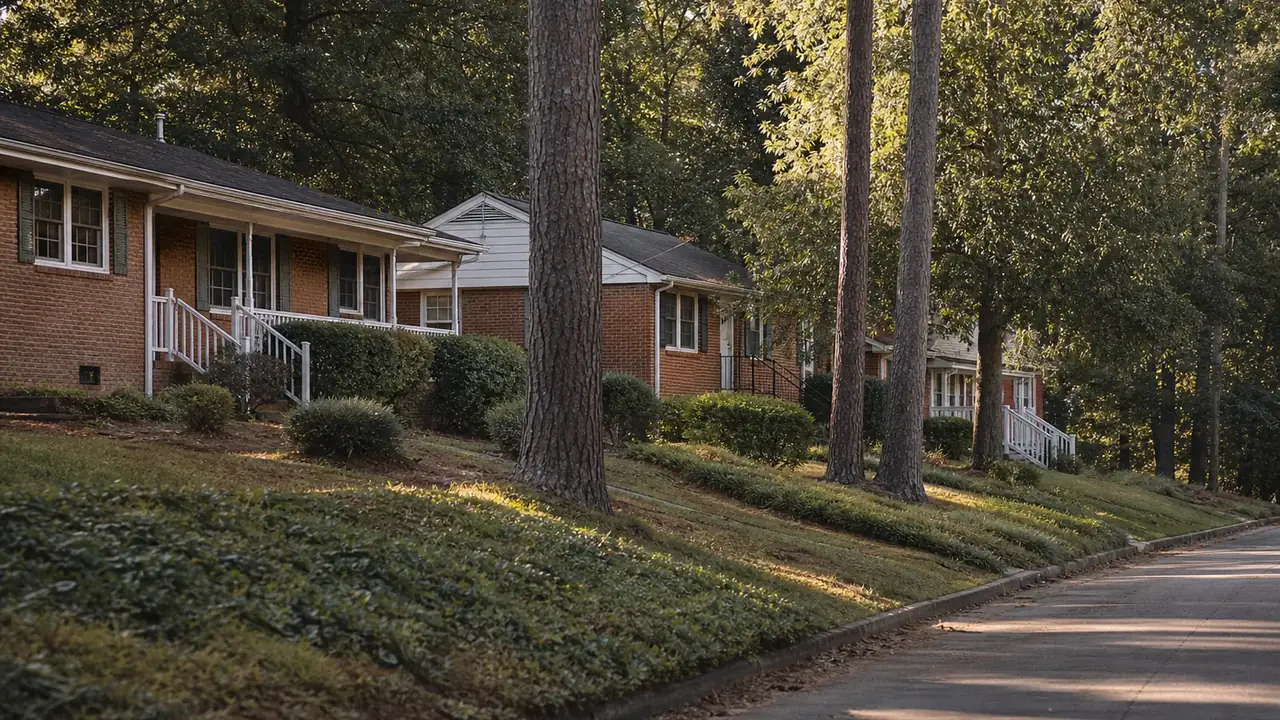
Atlanta Foundation Repair for Hillside Lots and Red Clay
Foundation repair in Atlanta usually starts with something small: a zigzag crack in the brick beside a window, a bedroom door that no longer latches, a floor that feels soft over the crawl space. This site explains what those signs tend to mean here and what the usual fixes cost.
Fixr's January 2026 national guide places most foundation repair jobs at $2,200–$8,200, averaging about $5,200. A crack seal is $200–$1,000, a steel pier under a sinking corner $1,000–$3,000 apiece, and fixing a sagging floor from the crawl space $1,000–$8,500 (Fixr, 2026). Read them as national yardsticks, not Atlanta quotes.
What does foundation repair in Atlanta usually involve?
It depends on what the house stands on. Only about one Georgia home in five has a basement, against three in ten nationally (U.S. Energy Information Administration, 2024). The rest sit on a crawl space or a slab, and each fails in its own way.
- Crawl space houses rest on brick or block piers and a wood girder. Trouble shows as sagging or bouncy floors, and the fix is often under the house, not in the foundation wall.
- Slab houses show settlement as cracked brick veneer, gaps at trim and doors that bind.
- Basements cut into a slope carry soil against the uphill wall and can crack there.
Age matters too. About 43% of Atlanta's homes were built before 1980 and roughly 12% before 1940 (U.S. Census ACS 2020–2024), which means older piers, older framing and decades of roof water at the same corner.
Signs people notice first
- Stair-step cracks in brick mortar, often rising from a window corner.
- Doors and windows that stick or show a wedge-shaped gap at the top.
- Floors that slope toward one wall, dip mid-room, or bounce underfoot.
- Gaps opening at baseboards, crown molding or counters.
- Under the house: damp soil, a musty smell, soft wood on the girder.
The page on what each warning sign usually means takes them one at a time. Photograph anything you find beside a ruler and date it; a record of change beats any single photo.
Three kinds of repair, one page each
- Foundation crack repairStair-step cracks in brick, cracked block and drywall cracks: which to seal and which to trace.
- Foundation settlement and house levelingSinking corners, sloping floors and sticking doors, and the piers and lifts that answer them.
- Crawl space repair for sagging floorsRotted girders, tired joists and support posts under the floor, and what each fix costs.
- Foundation repair cost guide for 2026Cracks, piers, leveling and crawl space framing, each with its published national range.
Atlanta ground and warning signs
- Atlanta's red clay and hillside lotsWhat the Fulton County soil survey says about houses here, and the 2009 creek floods.
- What that crack, slope or sticking door meansEight things homeowners notice, each answered in plain terms with the repair it points to.
Red clay that stays put, slopes that don't
Most of Fulton County's soil formed where it sits, as granite, gneiss and schist slowly weathered into clay. Where the soil survey records a soil's origin, 83% of the area is this weathered-in-place material and nearly all the rest is creek and river deposits (USDA NRCS soil survey). Cecil soils, one of the most common series, carry a firm red clay subsoil from about 8 inches down.
That clay is not the swelling kind that cracks slabs across Texas. When the NRCS rates Fulton County soils for houses, shrink-swell barely appears among its reasons. Slope does, by a wide margin, followed by flooding and a shallow wet layer along creeks. The guide to Atlanta's red clay and hillside lots explains what that means for a house cut into a hill or built on fill.
Rain that never takes a season off
Hartsfield airport averages 50.43 inches of precipitation a year, and no month is truly dry: every one averages between 3.28 inches (October) and 4.75 inches (July), with about 15 days a year bringing an inch or more (NOAA 1991–2020 normals). On a sloped lot, that water runs downhill toward whichever wall faces it. Short downspouts, a patio that tilts toward the house, or a gutter that overflows at one corner can soften the soil under a footing or keep a crawl space damp all year. Extending downspouts and correcting grade are about the cheapest foundation work there is, and they protect any repair that follows.
How a request works
This website is a guide, not a contractor. Nobody here digs, jacks or bolts anything. When you send the form or call, the details go to one independent specialist in foundations and crawl space framing who works around Atlanta. The specialist rings you, asks what you have noticed, and sets up a visit if one makes sense.
A little homework before signing pays off. Georgia's State Licensing Board for Residential and General Contractors licenses residential and general contractors, so ask which license the company carries and check it in the Secretary of State's license lookup. The City of Atlanta's Office of Buildings can tell you if a permit applies. Keep the scope of work and any warranty on paper.
Questions homeowners ask
How much does foundation repair cost?
Fixr's January 2026 guide puts most projects between $2,200 and $8,200, and This Old House reports a similar $2,224–$8,134. Patching one crack is often a few hundred dollars, while piering the whole perimeter can run $10,000–$40,000. The Atlanta foundation repair cost guide lists each repair with its source.
Is a stair-step crack in my brick serious?
Not always, but it is worth watching. Hairline steps in mortar are common as brick veneer ages. A crack that widens, runs past a window, or comes with doors that start sticking points to settlement underneath, and that deserves a look before it moves further.
Does radon matter during foundation or crawl space work?
It can. Fulton County sits in the EPA's Radon Zone 1, the top tier for predicted indoor levels, and the agency advises testing every home. Cracks, openings and crawl space air all affect how soil gas enters, so testing once before the work and again after it is a sensible habit.
Is the first visit free?
It depends on the company. Many local specialists don't charge for the first visit; ask when they call, before they come out.
Sources
- Census Bureau ACS 5-year estimates (2020-2024), table B25034, Atlanta city, Georgia
- EIA 2024 RECS state highlights: home structural characteristics (PDF)
- NOAA NCEI U.S. Climate Normals 1991-2020 (station USW00013874, Atlanta Hartsfield airport)
- Web Soil Survey, USDA Natural Resources Conservation Service (survey area GA121, Fulton County)
- Georgia Secretary of State: rules of the State Licensing Board for Residential and General Contractors, ch. 553-1
Tell us what the house is doing
A sentence is enough: where the crack is, which floor dips, or what you saw under the house. One independent specialist who works on Atlanta foundations and crawl spaces will phone you to talk it through and, if it helps, arrange a visit.